BACK
Post Date:
31st Jan 2026
Post Author:

Post Summary:
Pears have a reputation for being a tricky candidate to grow, but with the correct guidance they need not be.
GrowMad's David Hinckley uncovers the truth...
Post Sponsor:
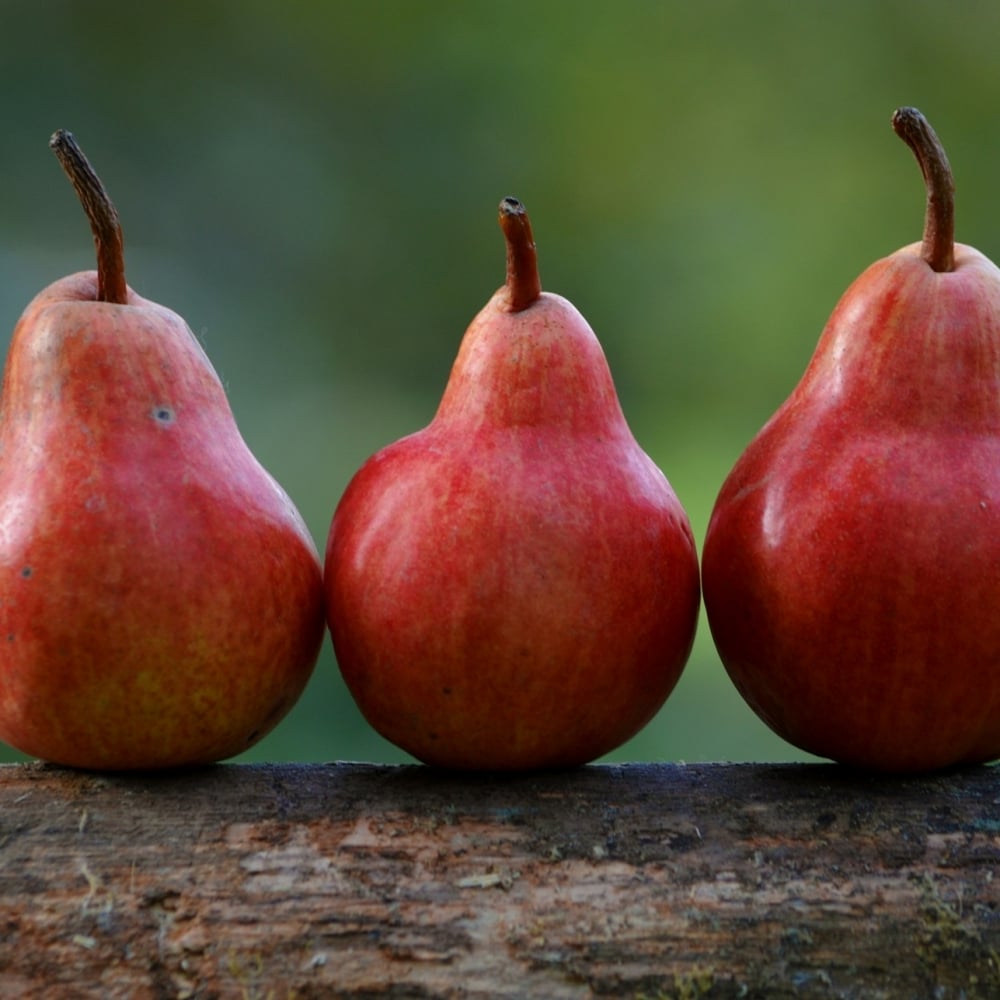
Growing Pears: A Complete Guide for the Home Gardener
| Introduction
There's something deeply satisfying about biting into a perfectly ripe pear from your own garden or allotment. As one of the most delicious desert fruits, homegrown pears offer flavour that store-bought fruit simply can't match - sweet, juicy, and wonderfully aromatic. While pears have a reputation for being slightly more challenging than apples, they're entirely manageable for home gardeners willing to invest a little time and attention. With the right selection of varieties, proper care, patience and correct storage, you can enjoy abundant harvests from late summer well into the following year. GrowMad’s David Hinckley digs a little deeper,,,
| Choosing the Right Pear Variety
History has provided hundreds of wonderful old heritage varieties, such as ‘Bergamotte de Millepieds’, ‘Fondante de Thiriott’ and ‘Vicar of Winkfield’. Selecting appropriate varieties is crucial for success with pears. European pears (Pyrus communis) are the most common choice for home gardens or allotments. ‘Conference’, the most reliable and popular pear in the UK crops heavily, copes with cooler climates better than many others, and is partially self-fertile, meaning you don’t strictly need a pollination partner. The fruits are long and narrow with a mild sweetness. ‘Concorde’, a cross between ‘Conference’ and ‘Comice’, combine the reliability of the former with the exquisite flavour of the latter. Smooth, sweet flesh and a very regular cropping habit. ‘Doyenné du Comice’ (or simply ‘Comice’) is considered by many to be the finest dessert pear for flavour. It can be less reliable in poor weather and needs careful pollination, but when happy it rewards you with beautifully aromatic fruit and the finest of eating qualities.
| Understanding Pear Rootstocks
Rootstock selection significantly impacts your tree's ultimate size, productivity, and longevity.
Pear rootstocks typically include quince (Cydonia oblonga) and various pear seedling options. Quince rootstocks - particularly 'Quince A' (semi-dwarf) and 'Quince C' (dwarf) are ideal for small gardens and make for easy harvesting. These trees bear fruit earlier, often within 3-4 years, but may have shorter lifespans of 20-25 years. Standard pear seedling rootstocks create full-sized trees with proportional spreads. While these take longer to begin fruiting (typically 5-7 years), they're exceptionally long-lived, often producing for 50 years or more. They're also more cold-hardy and drought-tolerant once established.
For most home gardeners, dwarf or semi-dwarf rootstocks provide the best balance of manageable size and reasonable productivity. Consider your available space, and whether you're comfortable on ladders when making your selection.
- Quince A (QA) The most common rootstock for home gardens. Produces a medium-sized tree (3 - 4m) with good vigour and cropping potential. A strong choice for allotments and open gardens.
- Quince C (QC) A dwarfing rootstock suited to smaller gardens or trained forms such as cordons, espaliers, and fans. It produces a tree (2.5 - 3m), being easy to prune and harvest.
- Pear Seedling Extremely vigorous. These trees can reach 6 metres or more and are best left to orchards or large rural gardens.
- Pyrodwarf A modern, semi-dwarfing (4.5m) rootstock offering good disease resistance and manageable size. Increasingly popular among home growers.
| Planting and Growing Pears
Pollination: Most pear varieties require cross-pollination, so you'll need at least two compatible varieties that bloom simultaneously. Fortunately, most varieties pollinate each other readily.
Site: Pears thrive in most fertile, moisture-retentive but well-drained soils. They dislike chalk soils. Plant in a sunny spot or against a south-facing wall avoiding frost-pockets where late spring frosts might damage blossom.
Planting: Pears are best established by planting bare-root trees from November until late winter or early spring whilst they are still dormant. Plant immediately upon arrival. Dig a hole twice as wide as the root system but no deeper than the roots currently sit. Work some well-rotted compost into your planting soil. Containerised trees are available year-round, but are still better to be established during the dormant period. If you are restricted for space, consider growing in a large container, but ensure you have a variety grafted to a suitable dwarfing rootstock such as ‘Quince C’. Choose a planting site with good air circulation to minimise disease pressure, but avoid exposed hilltops. Plant your trees deep enough to provide support during establishment, but never deeper than where the tree was grafted (the graft union).
Care: Water young trees well after planting and during dry spells to assist establishment. Once established, pear trees will pretty much look after themselves. They will however, appreciate a high-potash fertiliser application in spring (avoid excessive nitrogen which encourages succulent growth that's vulnerable to disease) and a layer of organic mulch to suppress weeds and retain moisture.
Training: Beyond traditional tree forms, pears adapt well to ornamental training systems that maximise space and can create stunning garden features. Cordons feature a single stem planted at a 45-degree angle with compact fruiting spurs along its length. Fan training produces a graceful arrangement where multiple branches radiate outward from a short trunk, ideal for growing against walls. Espalier creates a striking architectural effect with a vertical trunk supporting several horizontal tiers of branches extending symmetrically on both sides. For the smallest spaces, Stepovers consist of a very short trunk with just one pair of low horizontal branches forming a T-shape, often used to edge pathways or beds.
Fruit Thinning: Pears often set heavy crops. Thinning helps improve fruit size and reduce the risk of biennial bearing. In most growing seasons, this will happen naturally, as with apples, and is known as the June Drop. This is the process where the tree limits fruit to what it can support. Should your pear trees remain laden beyond this point, thin to one fruit every 10-15cm. This seems counterintuitive, but you'll harvest larger, better-quality fruit.
Pruning: Prunning is essential for structure, health, and productivity. During the dormant season, establish a central leader and well-spaced scaffold branches. Remove crossing branches, water shoots, and dead wood. Summer pruning can help to keep trained trees to their desired shapes.
Harvesting: Pears should be harvested when they are full-sized and have reached their mature colour, generally during late summer onwards depending on variety. They are usually harvested before they are fully ripe and should then be ripened indoors at room temperature.
| Pests and Diseases of Pears
Pear scab causes dark spots on fruit and leaf blisters. Prevent with fungicide sprays from bud-break until July, remove fallen leaves, and choose resistant varieties - older cultivars are more susceptible.
Canker produces dieback on main stems and branches. Prune out affected wood where feasible.
Pear leaf blister mite causes orange blisters on leaves. Control is difficult - apply systemic insecticide when leaves emerge. Remove and destroy fallen leaves.
| Health Benefits of Pears
Beyond their delicious taste, pears offer impressive nutritional benefits. A medium pear provides about 6 grams of dietary fibre - nearly a quarter of the daily recommended intake - including both soluble and insoluble fibre. Fibre is essential for digestive health and may help regulate blood sugar levels. Pears are rich in antioxidants, including vitamin C, copper, and beneficial plant compounds like flavonoids and carotenoids. These antioxidants help combat oxidative stress and inflammation in the body. The fruit's high fibre and antioxidant content may contribute to heart health by reducing cholesterol levels and supporting healthy blood pressure. They are also a good source of vitamin K, and potassium.
| Conclusion and Takeaway
Growing pears at home is both rewarding and surprisingly forgiving. With a suitable variety, the right rootstock, and a sunny spot, even a small garden can yield baskets of luscious fruit. Whether you train an elegant espalier against a wall or plant a traditional bush tree at the allotment, pears will repay your care year after year. With good pruning, sensible pest management, and attention to pollination, you’ll enjoy the satisfaction - and the flavour - of homegrown pears for years to come.