


BACK
Post Date:
7th Nov 2026
Post Author:

Post Summary:
Composting is nature's recycling system, transforming everyday garden and kitchen waste into something wonderful for your soil.
GrowMad's Claire Tilley digs a little deeper to uncover the secrets to making your own homemade compost.
Post Sponsor:
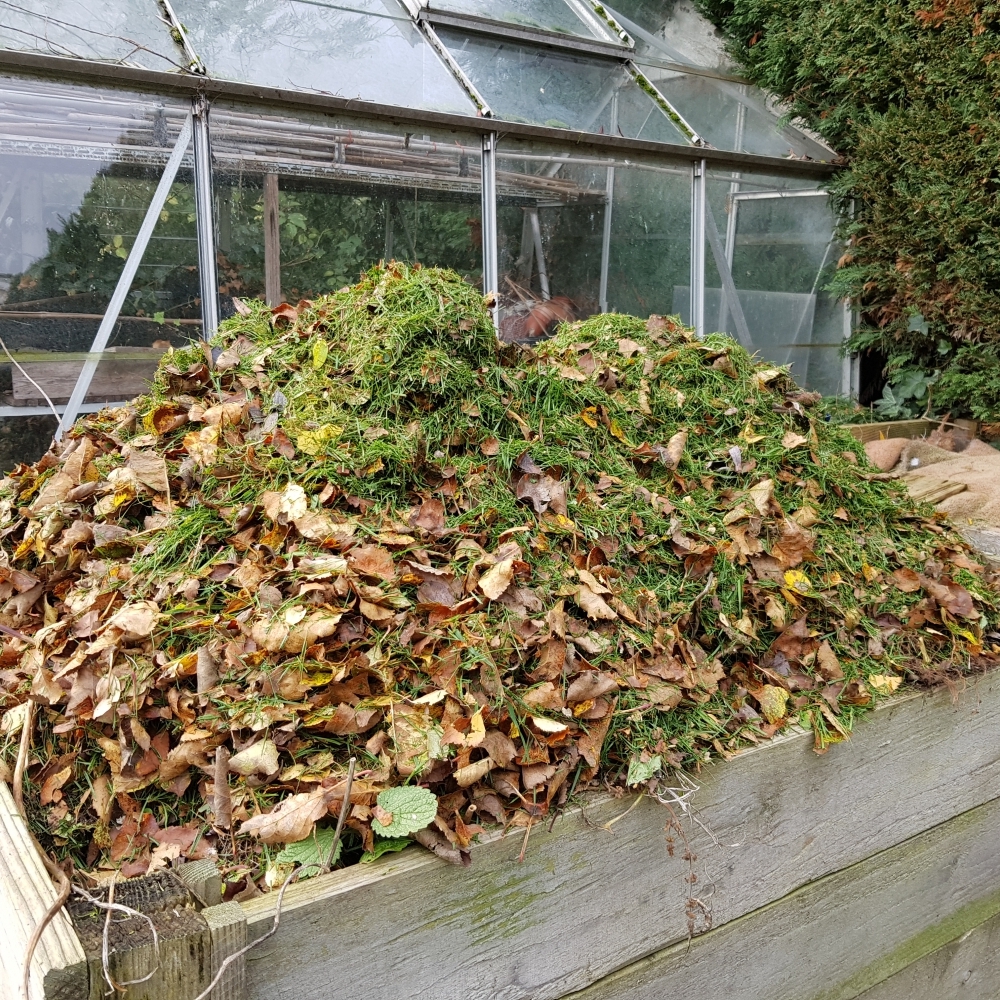
Composting-Turning Garden Waste into Garden Gold
| Introduction
There's something rather satisfying about making your own compost, isn't there?
You spend months growing vegetables, tending your plants, cutting the grass and generally trying to keep the garden under control. And what do you end up with? Piles of leaves, grass clippings, spent plants and vegetable peelings.
But rather than seeing all this as rubbish to get rid of, why not look at it as the beginnings of something rather wonderful?
Because with a little patience, some basic knowledge and a helping hand from nature, much of that garden waste can be transformed into one of the most useful things you can give your soil.
And the best part? Nature does most of the work for you!
| Why Bother Making Compost?
We often talk about feeding our plants, but at GrowMad we're just as interested in feeding the soil.
Healthy soil isn't simply something that holds plants upright. It's a living environment, home to an extraordinary community of bacteria, fungi, earthworms and countless other organisms.
And these are the creatures that help keep our gardens productive.
Adding well-made compost helps improve soil structure, encourages biological activity and increases the soil's ability to hold moisture.
On heavier soils, organic matter can help improve structure and drainage. On lighter, sandy soils, it can improve moisture retention and help reduce nutrient losses.
It also provides a gradual supply of nutrients as the organic matter continues to break down.
So, rather than thinking of compost simply as a fertiliser, we prefer to think of it as a way of looking after the soil itself.
After all, look after your soil and it will do a great deal of the work for you.
| The Secret Ingredients- Browns and Greens
Making compost isn't particularly complicated, but understanding what goes into your heap can make an enormous difference to the results.
We like to think of it a little like making a cake. You need the right ingredients, a reasonable balance between them and suitable conditions for everything to come together.
In composting, two of the most important ingredients are what we call Browns and Greens.
Browns are carbon-rich materials, including:
- Dry autumn leaves
- Shredded cardboard and plain paper
- Straw
- Small woody prunings
- Wood chippings
Greens are generally nitrogen-rich materials, including:
- Fresh grass clippings
- Vegetable peelings
- Green garden prunings
- Young weeds before they set seed
- Coffee grounds
The microorganisms responsible for decomposition need both carbon and nitrogen. Carbon provides much of their energy, while nitrogen is needed for growth and reproduction.
Too many Browns and the heap can take an age to break down. Too many Greens, particularly wet grass clippings, and you may find yourself with a slimy, rather unpleasant-smelling mess.
As a practical starting point, try using roughly two parts Browns to one part Greens by volume, adjusting the mixture as necessary.
It's not an exact recipe, and you certainly don't need to stand beside your compost bin with a measuring jug!
The important thing is to maintain a sensible balance.
| There's a whole world living in your compost heap
Now, this is where things get really interesting.
What looks like a pile of rotting vegetation is actually a remarkably busy biological system.
Bacteria begin breaking down the softer, more readily available materials. As they feed and multiply, they release heat.
In a well-built compost heap, temperatures can rise considerably, sometimes reaching 55–65°C.
At these temperatures, heat-loving bacteria become particularly active, accelerating decomposition. If sufficient temperatures are maintained throughout the heap, many weed seeds and plant pathogens can also be destroyed.
But bacteria aren't working alone.
Fungi help tackle tougher materials, including woody plant tissues, while other microorganisms continue breaking down the organic matter.
And then there are the larger inhabitants.
Woodlice, beetles, mites and other small creatures help shred and fragment the material, making it easier for microorganisms to do their work.
Earthworms often move in as the heap cools and conditions become more suitable.
It's a wonderful example of nature's recycling system.
And all this activity is taking place without us having to organise a single committee meeting!
| Hot or Cold Composting?

One of the questions we often encounter when discussing composting is whether it's necessary to produce a hot heap.
The answer is no.
There are two main approaches, and both have their place.
Hot composting involves building a reasonably large heap, ideally around a cubic metre, with a good mixture of materials. Moisture and oxygen need to be managed, and the heap may require regular turning.
The reward is faster decomposition, sometimes producing usable compost within a few months, depending on the method and conditions.
Cold composting, on the other hand, is rather more relaxed.
You add suitable materials as they become available and allow them to break down gradually.
It's slower, often taking many months or longer, but requires considerably less effort.
For many home gardeners and allotment holders, this is perfectly adequate.
A cold compost heap may not reach temperatures sufficient to destroy weed seeds or pathogens reliably, so it's worth being more selective about what goes into it.
But don't feel you've failed simply because your compost heap isn't steaming away on a frosty morning.
The microorganisms are still working, even if they're taking their time.
| Air and water – the two ingredients we often forget
We've talked about Browns and Greens, but there are two other essential ingredients that are easily overlooked.
Oxygen and water.
Most of the microorganisms we want to encourage work best when oxygen is available.
If a compost heap becomes compacted and waterlogged, air is pushed out of the spaces between materials.
Decomposition then becomes dominated by organisms that can function without oxygen, often producing the unpleasant smells associated with a badly managed compost heap.
Turning the heap or adding coarser materials can help restore airflow.
Water is equally important.
Microorganisms need moisture to function, but too much can cause problems.
The simplest test is to take a handful of composting material and squeeze it.
Ideally, it should feel rather like a wrung-out sponge: damp, but not dripping.
Too dry? Add a little water.
Too wet? Mix in some dry Browns and improve ventilation.
Sometimes the simplest solutions really are the best.
| What shouldn't go into the compost heap?
Although an enormous range of organic materials can be composted, there are a few things we'd recommend keeping out of an ordinary garden heap.
Meat, fish and dairy products can attract unwanted visitors, particularly rodents.
Pet waste and human waste can introduce harmful pathogens.
Diseased plant material is best avoided unless you're confident your composting system can achieve and maintain suitable temperatures.
Likewise, perennial weed roots and weeds carrying mature seeds can survive in a cold heap and create problems when the finished compost is spread around the garden.
We'd also avoid ash from smokeless fuels and heavily treated or contaminated materials.
Eggshells, incidentally, can be composted, although they break down slowly. Crushing them first helps.
The guiding principle is simple: if you're unsure whether something is suitable, leave it out until you've checked.
| When composting goes wrong
We've all had compost heaps that haven't quite behaved themselves.
Fortunately, most problems are fairly straightforward to put right.
The heap smells dreadful?
Usually a sign of too much moisture, too much nitrogen-rich material or insufficient oxygen. Add some dry Browns and turn the heap.
Nothing seems to be happening?
The heap may be too dry, too small or lacking nitrogen-rich materials. Check the moisture and consider adding some fresh Greens.
It's wet and slimy.
Often the result of too many grass clippings or other wet materials. Add shredded cardboard, straw or dry leaves and mix thoroughly.
There are worms everywhere!
Excellent news.
Worms are a welcome part of the composting process, particularly as the heap matures.
The heap isn't getting hot.
Don't panic. If you're cold composting, this isn't necessarily a problem at all.
Composting isn't about achieving perfection. It's about understanding what's happening and making adjustments when necessary.
| Autumn leaves – a gift from nature

At this time of year, there's one composting ingredient we have in abundance.
Leaves!
They may be a nuisance on lawns and paths, but fallen leaves are an incredibly useful resource.
You can add some to your compost heap, where they provide valuable carbon-rich material.
Or you can make leaf mould.
Leaf mould is produced primarily through the slower decomposition of fallen leaves, with fungi playing an important role.
Simply collect the leaves, moisten them if necessary and place them in a wire enclosure or suitable bags with ventilation holes.
Then leave nature to get on with it.
Depending on the type of leaves and conditions, the process can take a year or two, sometimes longer.
The resulting material is a wonderful soil conditioner, helping improve structure and moisture retention.
It isn't particularly nutrient-rich, but that's not really its purpose.
And considering the raw materials are quite literally falling from the trees, it seems a shame not to make use of them.
| How do you know when your compost is ready?

Finished compost should generally be dark, crumbly and pleasantly earthy-smelling.
Most of the original materials will no longer be recognisable, although the occasional twig or piece of eggshell may remain.
It should also have cooled to roughly the surrounding temperature.
If your compost still contains substantial amounts of undecomposed material, simply give it more time or return the larger pieces to the heap.
Once ready, it can be spread over vegetable beds, used as a mulch around established plants or incorporated into soil where appropriate.
And don't feel you have to dig it all in.
A surface application allows earthworms and other soil organisms to help incorporate the organic matter naturally.
| Composting is about more than recycling
For us, one of the most rewarding aspects of composting is the way it brings together so many of the principles of successful growing.
We're reducing waste, improving our soil, supporting biological activity and making better use of the resources already available to us.
And there's something deeply satisfying about returning material to the soil that helped produce it in the first place.
You don't need an expensive composting system, (although if you would like a ready-made one, check out our Compost Bins page in the Product Directory) a laboratory thermometer or a degree in microbiology to get started.
A simple compost bin, a reasonable mixture of materials and a little patience will take you a long way.
Of course, understanding the science helps explain why things work – and why they sometimes don't.
But ultimately, composting is one of the simplest ways we can work with nature rather than against it.
So, the next time you're faced with another mountain of fallen leaves, spent plants or garden trimmings, perhaps don't see it as another tedious autumn job.
See it as next year's soil improvement waiting to happen.
Happy composting!


